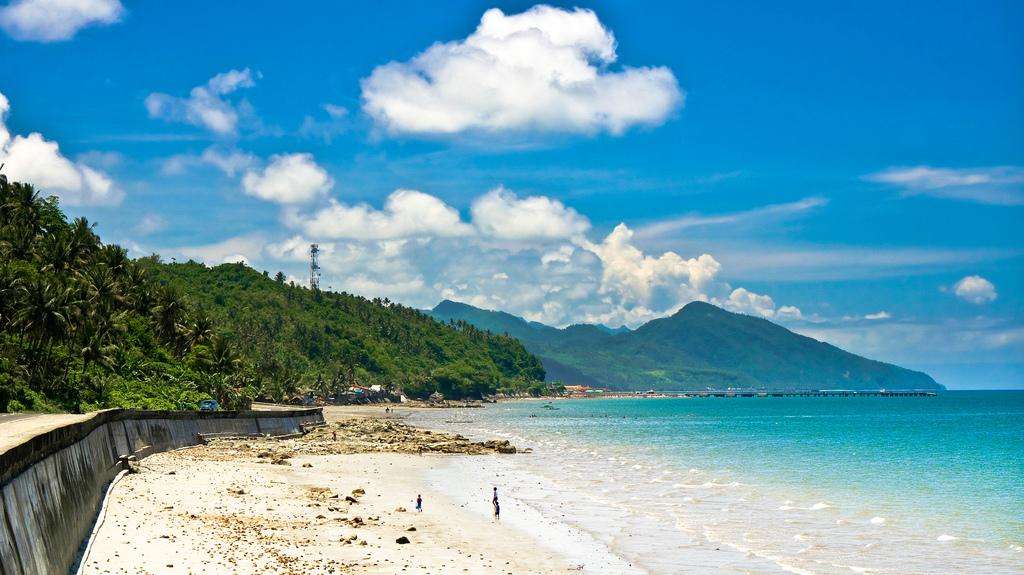
The Municipality of Catanauan
A living story of faith, heritage, and the enduring strength of its people — spanning more than three centuries of resilience along the southern coast.
Nestled along the southern coast of the Bondoc Peninsula in the province of Quezon, Catanauan is a municipality rich in history, culture, and tradition. Known today as one of the major commercial and agricultural centers of the Bondoc Peninsula, Catanauan has a story that spans more than three centuries, reflecting the resilience and faith of its people.
1 Early Beginnings
Historical records indicate that the existence of Catanauan as a pueblo (town) was already documented in a map created by Father Pedro Murillo in 1734. Earlier records also mention a petition in 1685 by Bishop Andres Gonzales of Nueva Caceres requesting that the Pueblo of Catanauan be assigned to the Recollect missionaries. These documents point to the town’s early establishment during the Spanish colonial period. The officially recognized foundation date of Catanauan is January 20, 1686, making it one of the oldest municipalities in the province.
2 Origin of the Name
The name “Catanauan” is believed to have originated from the word “tanauan” or “katanawan,” meaning a watchtower or lookout point. During the 18th and 19th centuries, coastal communities in Southern Luzon frequently suffered attacks from Moro raiders. To protect themselves, the residents built two stone watchtowers overlooking the sea.
The Two Watchtowers
One watchtower, known as Santa Maria, stood near the present-day wharf, while the other, called Castillo, was located near what is now the intersection of Rizal and Boncan Streets. These structures enabled residents to spot approaching vessels from a distance. Over time, the settlement became known as “Catanauan,” derived from these watchtowers.
3 The Founding Families
Historical accounts identify the families of Cabangan, Gonzales, Ramos, and de Luna as among the earliest settlers and founders of Catanauan. These pioneering families were primarily humble farmers who migrated from nearby areas and established a thriving agricultural community. Their hard work and leadership laid the foundation for the town’s growth and development.
4 Spanish Colonial Era
Throughout the Spanish period, Catanauan developed into an important coastal settlement. Agriculture became the primary livelihood, with coconut farming eventually emerging as the dominant industry. The town also served as a center of religious life, where Catholic traditions introduced by Spanish missionaries became deeply rooted in the local culture.
5 World War II
Like many towns in Quezon Province, Catanauan endured significant hardship during World War II. Historical records describe the occupation of the town by Japanese forces and the displacement of many residents. In 1944, parts of the municipality became a war zone, forcing families to evacuate to neighboring towns and communities. Despite the destruction and suffering, the people of Catanauan demonstrated remarkable courage and perseverance throughout the war years.
Despite the destruction and suffering, the people of Catanauan demonstrated remarkable courage and perseverance throughout the war years.
Historical Accounts of Catanauan6 Archaeological Significance
Beyond its colonial history, the area surrounding Catanauan holds evidence of a much older civilization. Archaeological studies conducted in the municipality and nearby communities have uncovered artifacts, pottery fragments, burial sites, and ancient tools that suggest human habitation in the region long before the arrival of the Spanish. These discoveries highlight the rich pre-colonial heritage of the Bondoc Peninsula.
7 Catanauan Today
Today, Catanauan is recognized as a first-class municipality and serves as one of the economic centers of the Bondoc Peninsula. Agriculture remains a major source of livelihood, particularly coconut production and copra trading. The municipality is also known for its vibrant culture, religious traditions, educational institutions, and growing commercial sector.
8 A Community Guided by Faith
Faith continues to play an important role in the lives of Catanauan’s residents. The town’s churches, religious celebrations, and community activities reflect the enduring Catholic heritage that has shaped generations of Catanauanins. Through centuries of challenges — from pirate raids and colonial rule to war and modernization — the people of Catanauan have remained steadfast in their faith, unity, and commitment to progress.
9 Conclusion
For more than 340 years, Catanauan has stood as a symbol of resilience, faith, and community spirit. From its origins as a small coastal settlement guarded by watchtowers to its present status as a thriving municipality, the town’s history is a testament to the determination of its people and their enduring legacy in the Province of Quezon.
Catanauan is not only a place of historical significance — it is a living story of faith, heritage, and the enduring strength of its people.